

889A Brasil: O Melhor Cassino Online e Apostas Esportivas | The Intricacies of Jueteng: Culture, Economy, and Politics Intertwined
Understanding Jueteng: A Cultural Phenomenon and Its Modern Implications
Jueteng is a popular numbers game and an illegal form of gambling in the Philippines, deeply entrenched in the country's socio-cultural fabric. Despite numerous government efforts to eradicate it, Jueteng persists as a significant part of Filipino community life. This phenomenon is not only a game but also a socio-economic activity that influences local politics, provides livelihoods to many, and reflects the resilience of community networks.
The Historical Roots of Jueteng
Jueteng has historical roots that trace back to the Spanish colonial period. The game evolved from Chinese gambling practices introduced by traders. Derived from "Huei" and "Tang", meaning "flower" and "to bet" respectively, the game became prevalent among Filipinos over the centuries. The simplicity and accessibility of Jueteng contributed to its popularization, allowing even the poorest individuals to participate with minimal monetary input.
The Mechanics of Jueteng
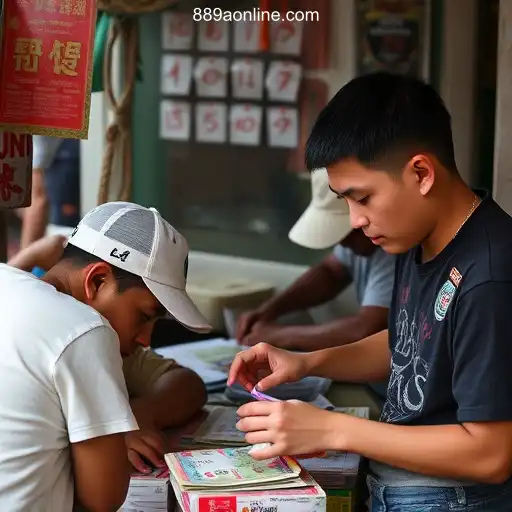
Jueteng operates as an underground lottery where players choose a combination of numbers typically ranging from 0-37. Bets are collected by personnel known as "cobradores," who traverse communities to gather entries and wagers. The collected bets are then reported to "cabos" or supervisors, who tally the numbers. During the draw, winning numbers are selected, and successful bettors receive cash rewards. This structure enables the community-driven and decentralized playing of Jueteng.
Data Systems and Technology in Modern Play
Today, technology's role in gambling is evident, with platforms like '889A Brasil: O Melhor Cassino Online e Apostas Esportivas' offering alternative legal online options. These platforms contribute to shifting some gambling activities from underground systems like Jueteng to regulated environments. However, the deep-rooted cultural and social nature of Jueteng remains, distinguished by its personal, community-oriented engagement that online alternatives cannot entirely replicate.
The Socio-Economic Impact of Jueteng
Despite its illegal status, Jueteng generates substantial economic activity, particularly in rural and urban marginalized areas. Earnings from Jueteng serve as supplemental income for many Filipinos, influencing local economies in various ways. The liquidity and immediate rewards permeate through levels of local governance, affecting everything from household finances to municipal budgets.
Employment Opportunities
The game provides informal employment to thousands who serve as collectors, operators, and administrative personnel within the hierarchical systems that coordinate Jueteng. This economic dependency complicates state efforts to suppress the game, as the eradication would remove a key income source for many families.
Political Ramifications
Jueteng's influence extends into politics, wherein political figures have often been implicated in scandals involving protection or patronage networks related to Jueteng operations. Allegedly, some local officials derive campaign funds from game proceeds or rely on it to bolster their political stance among constituents.
Government Efforts and Challenges
The Philippine government has made numerous attempts to eliminate Jueteng through legislative action, enforcement measures, and promoting alternative legal gambling options such as the Philippine Charity Sweepstakes Office (PCSO) games or the Small Town Lottery (STL). Nonetheless, enforcement is complicated by corruption, public acceptance, and resistance from stakeholders profiting from Jueteng.
Law Enforcement and Legislation
Efforts to implement stricter laws and penalties have encountered obstacles, including allegations of protection rackets and local corruption. Solutions often fall short due to the complex networks involved and the deep community ties intertwined with Jueteng activities.
Alternatives and Legalization
Legalization has been proposed as a method to regulate and tax Jueteng, bringing the earnings into the formal economy. Encouraging legal alternatives like '889A Brasil: O Melhor Cassino Online e Apostas Esportivas' serves to channel some activity away from illegal games, yet the strong cultural hold of Jueteng poses challenges to transition players to such platforms.
Cultural Significance and Community Integration
Beyond its socioeconomic implications, Jueteng holds cultural significance for many Filipinos. It is embedded within community rituals, celebrations, and gatherings. The game often brings unity and shared experience, offering a sense of ownership and belonging in otherwise economically disenfranchised communities.
Cultural Adaptation and Resilience
The persistence of Jueteng demonstrates the adaptive nature and resilience of Filipino communities in utilizing available structures to foster social cohesion and economic support within informal networks. These features complicate efforts to replace it with more conventional or regulated gambling forms.
Future Outlook and Possibilities
The future of Jueteng lies at the intersection of cultural preservation, economic necessity, and regulatory action. Innovative approaches are needed to balance these factors, ensuring that any transitions honor the community's social fabric while addressing the socio-economic challenges posed by illegal gambling. Exploring how platforms like '889A Brasil: O Melhor Cassino Online e Apostas Esportivas' can support this transition may offer insights into creating sustainable alternatives that respect cultural traditions.


Mapa do Site Google